Fences fail at the posts, not the panels. How aluminum, chain link, vinyl and wood actually behave in high wind, why gates go first, and a 5-point check before the season peaks.
Hurricane season runs June through November, and the busiest stretch for Florida is August through October. If you're thinking about a fence right now, storm performance deserves a place in the decision — right next to privacy and price.
Here's what actually matters, based on how fences fail rather than what a brochure claims.
Fences almost never fail where you think
When a fence goes down in a storm, the panels usually aren't the problem. The posts are. Either the post snapped at ground level, or the whole post levered out of the ground with the concrete still attached to it.
That's the single most useful thing to understand about storm-resistant fencing: you are not really buying panels, you are buying how deep the posts go and how much concrete is around them. Two identical-looking fences can behave completely differently in 60 mph gusts because one was set properly and the other wasn't.
It's also why the cheapest quote is worth a second look. Post depth is invisible the day the fence is finished, and it's the first place a rushed install cuts corners.
How each material handles wind
Aluminum: the best wind performer
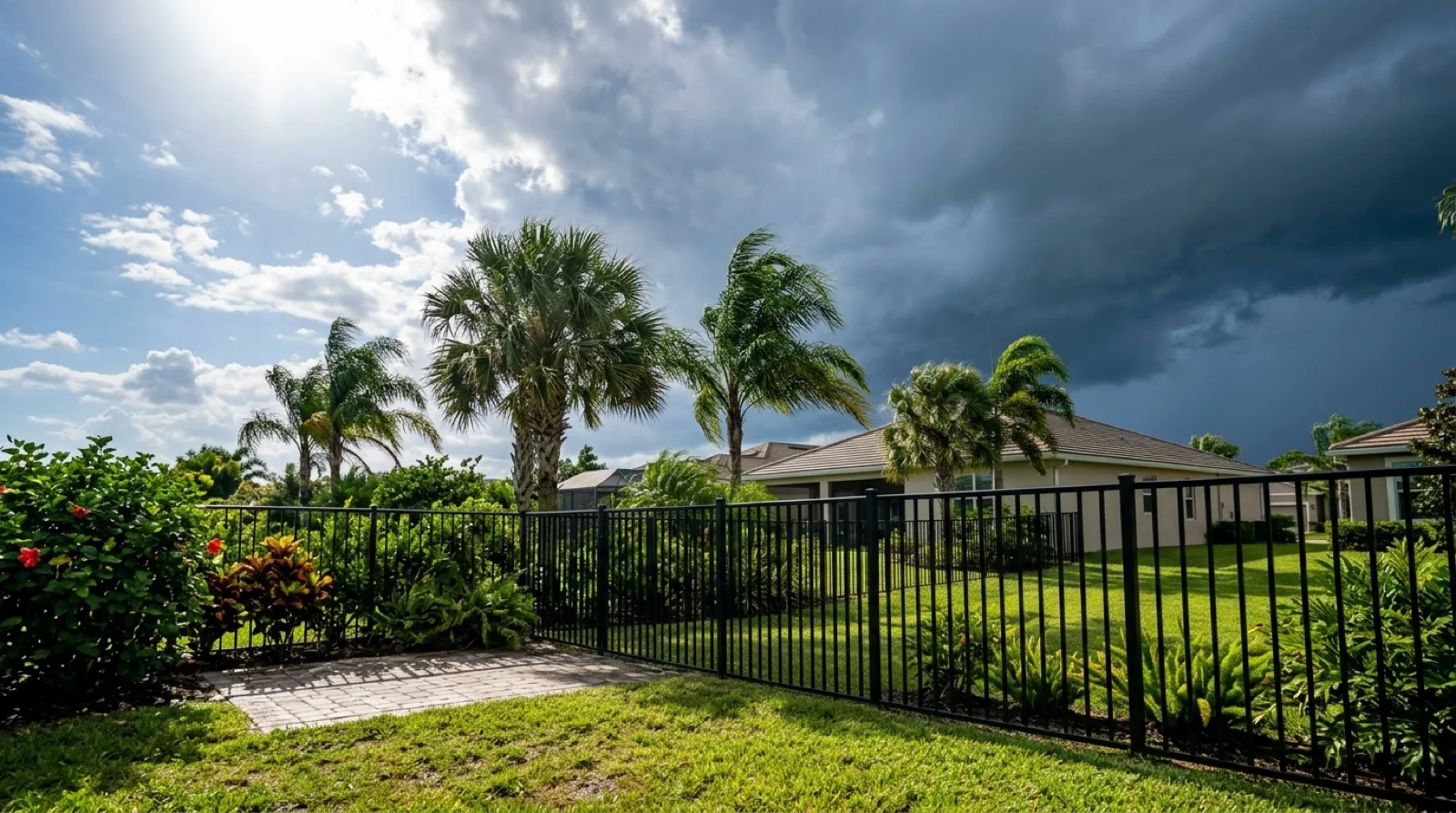
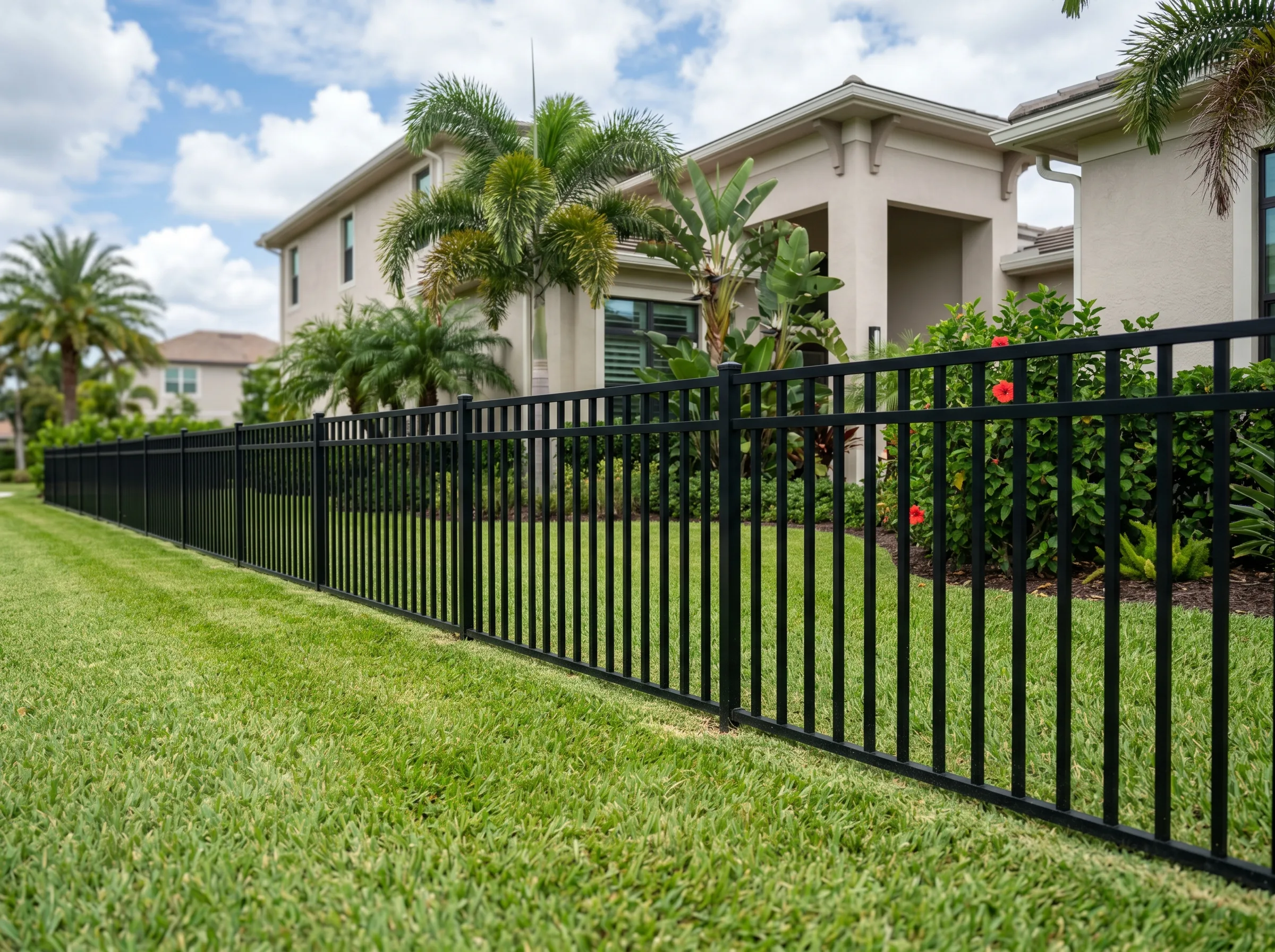
Aluminum picket fencing has gaps, and wind goes straight through them. There's very little surface for a gust to push against, so the load on the posts stays low. It also doesn't rust, so a storm that soaks it doesn't shorten its life.
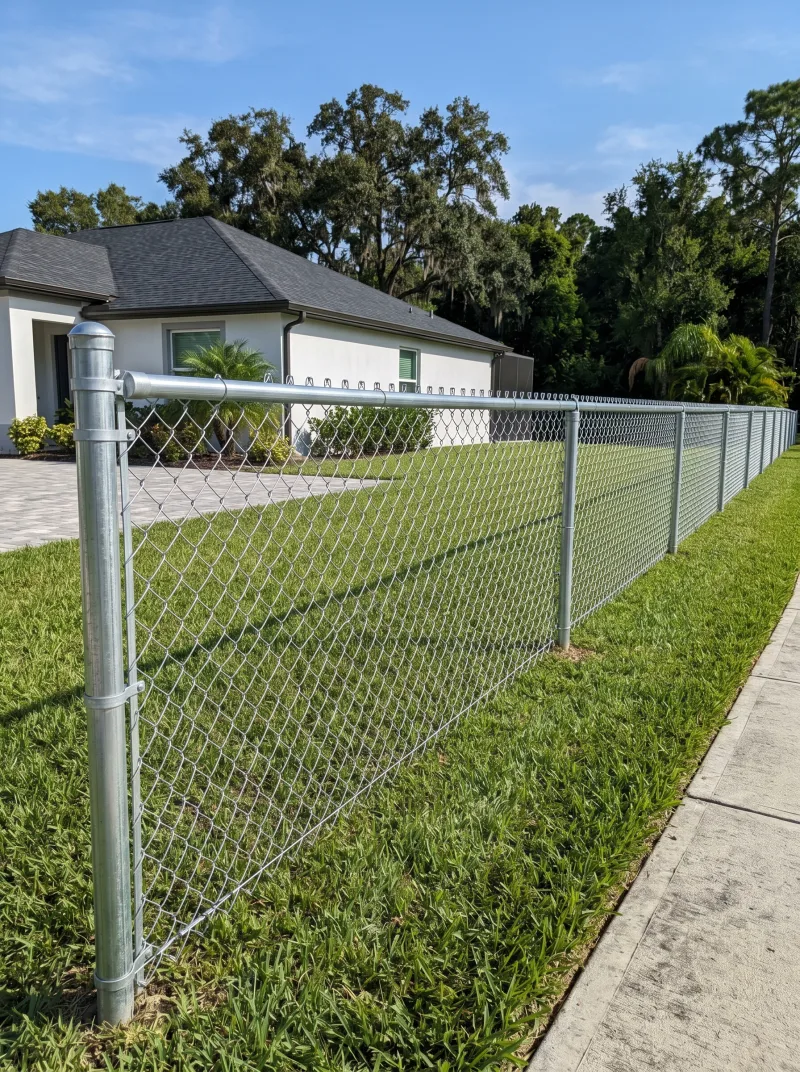
Chain link: better than its reputation
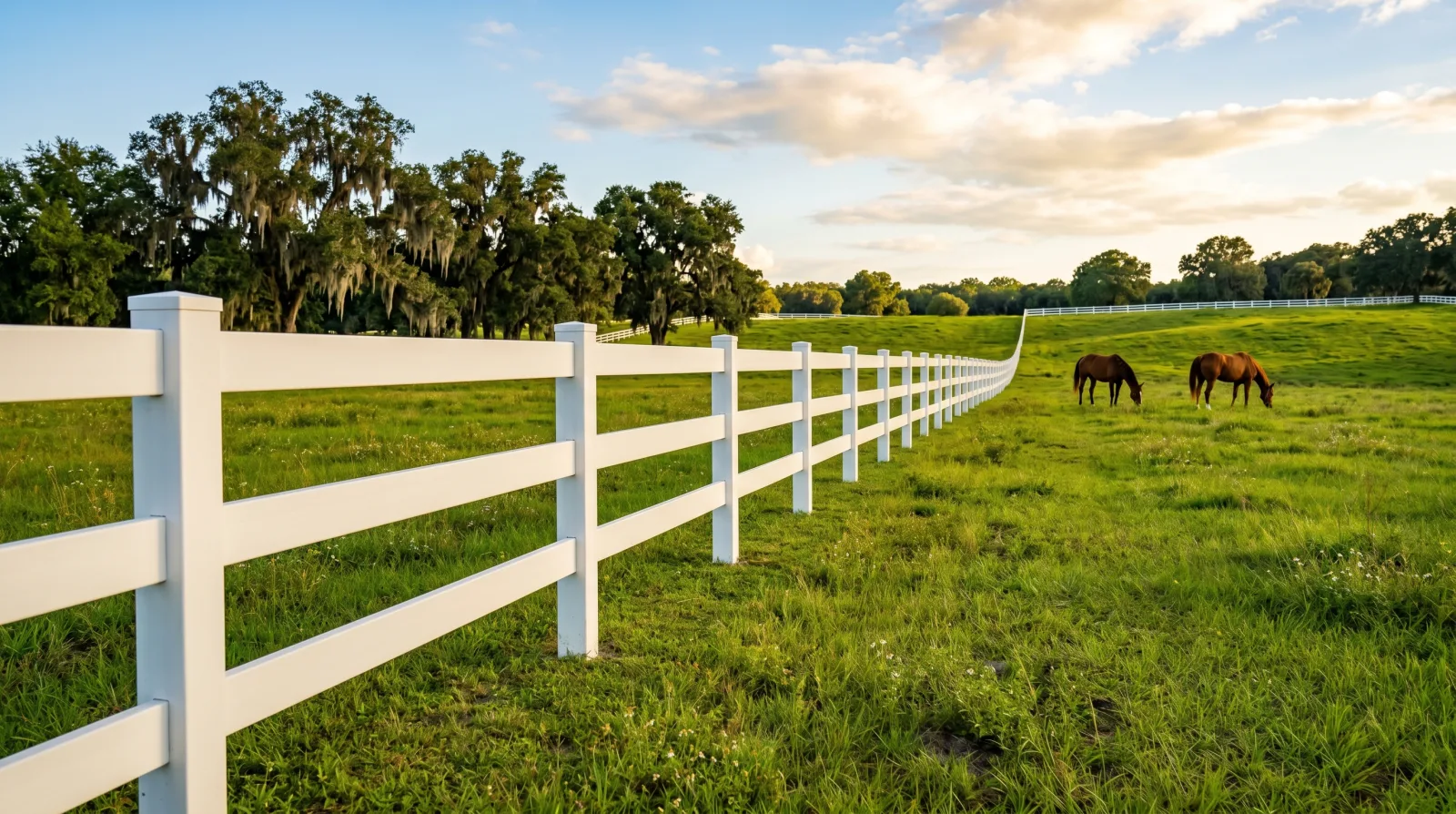
Chain link is mostly holes. Wind passes through the mesh and the fence barely notices. It won't win any beauty contests, but for pastures, back property lines, and large runs, it holds up well and costs less per foot than anything else.
Vinyl privacy: strong, but it's a sail
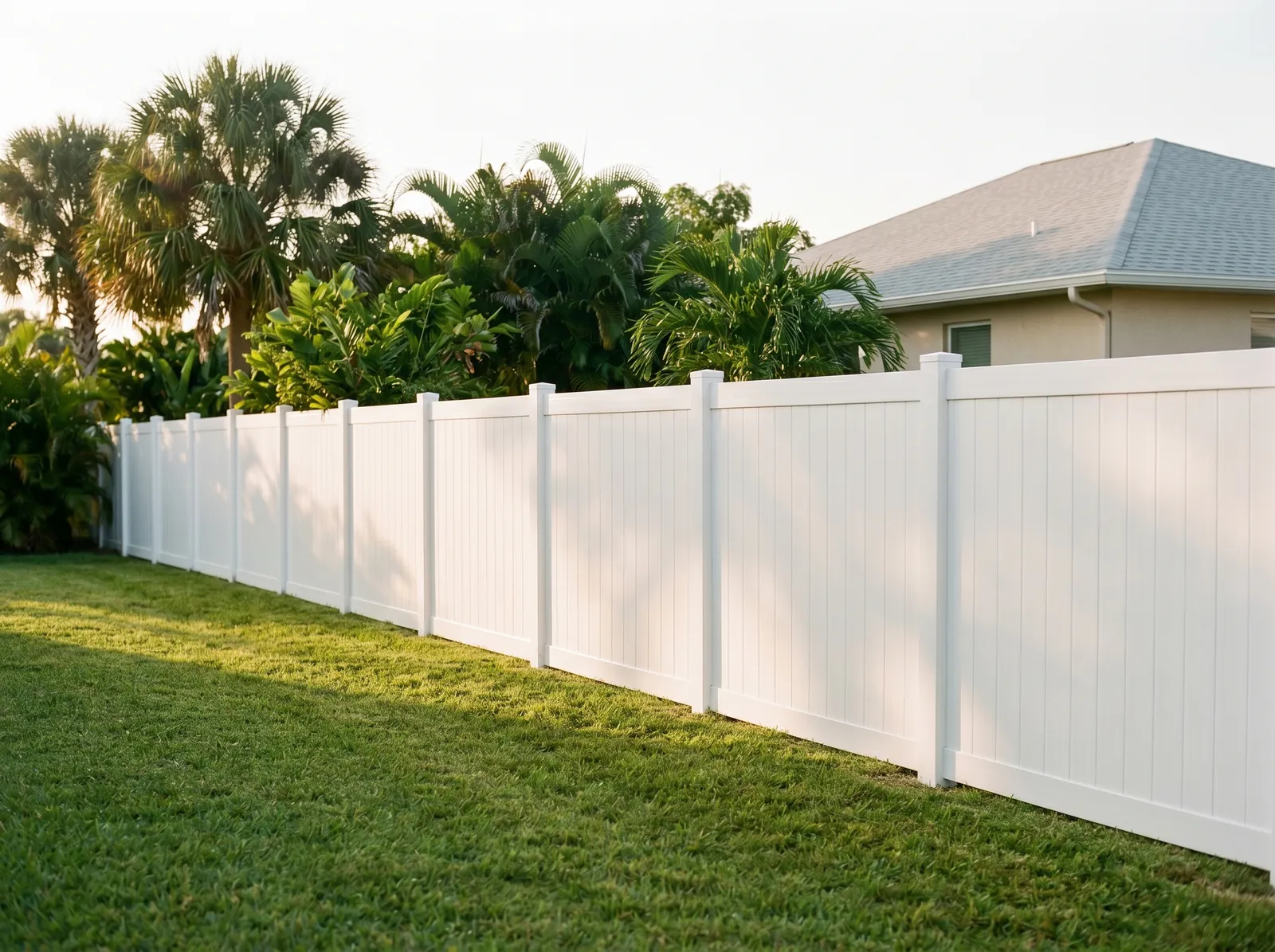
Solid vinyl panels give you the privacy nothing else gives you, and the tradeoff is that they catch every bit of wind. The vinyl itself is tough. The question is whether the posts underneath were set to carry that load.
A well-installed vinyl fence stands through Florida storms every year. A poorly installed one is the fence you see leaning in your neighbor's yard in October.
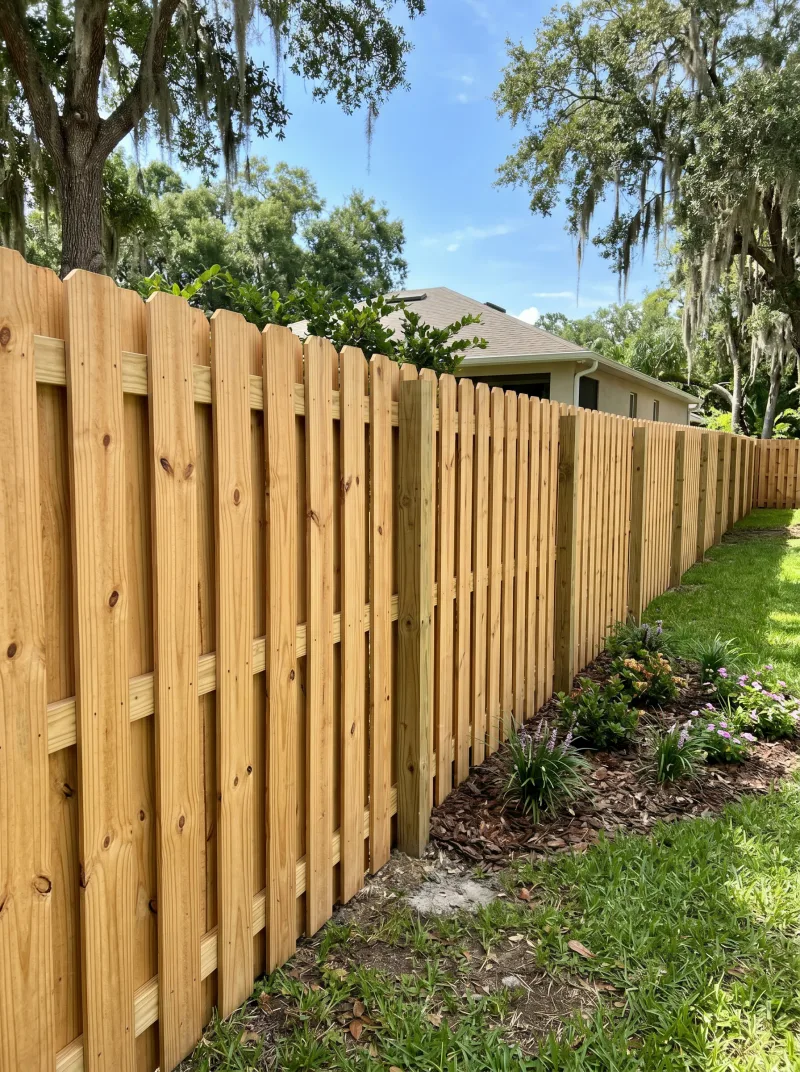
Wood: the one that ages badly
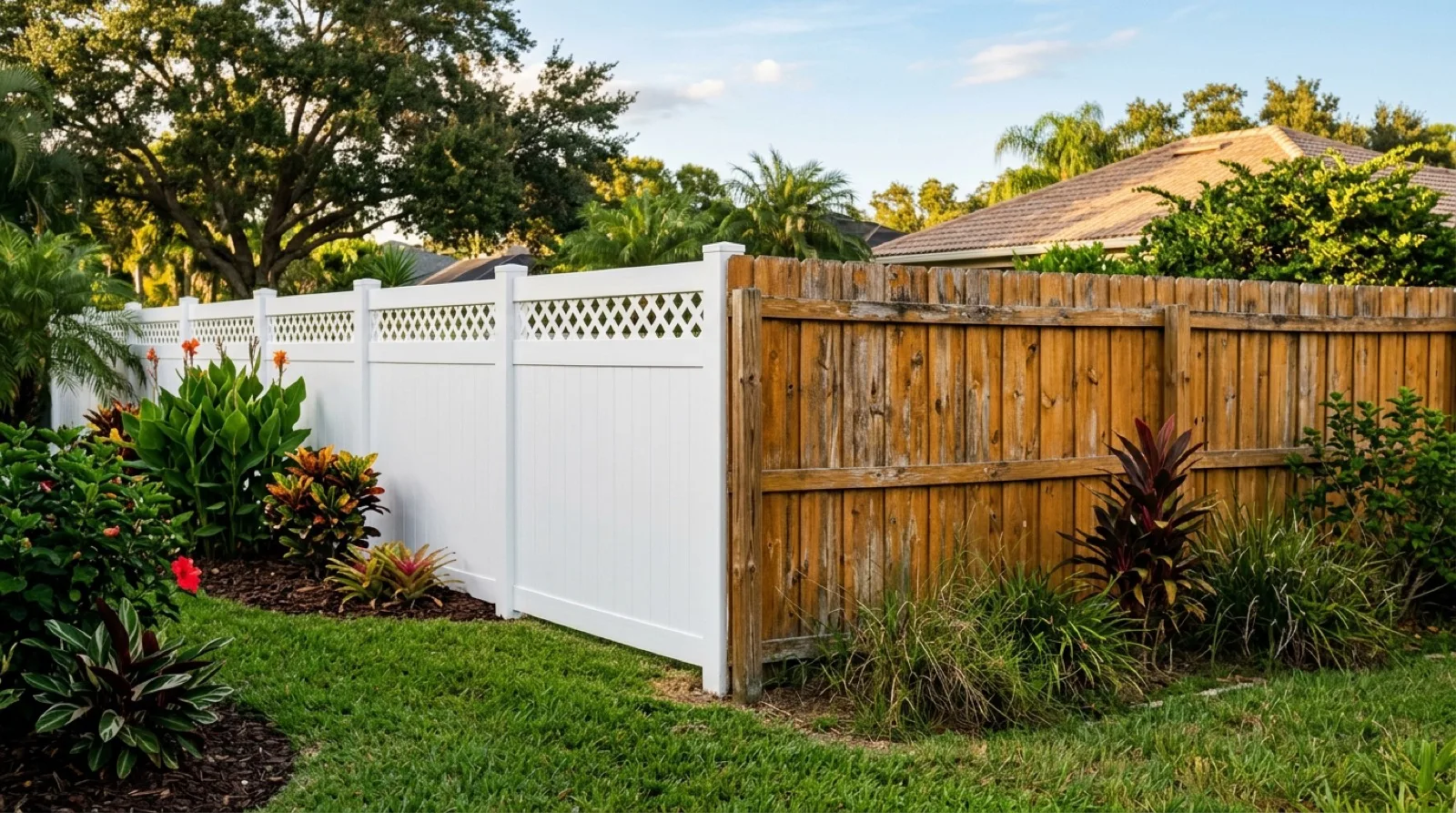
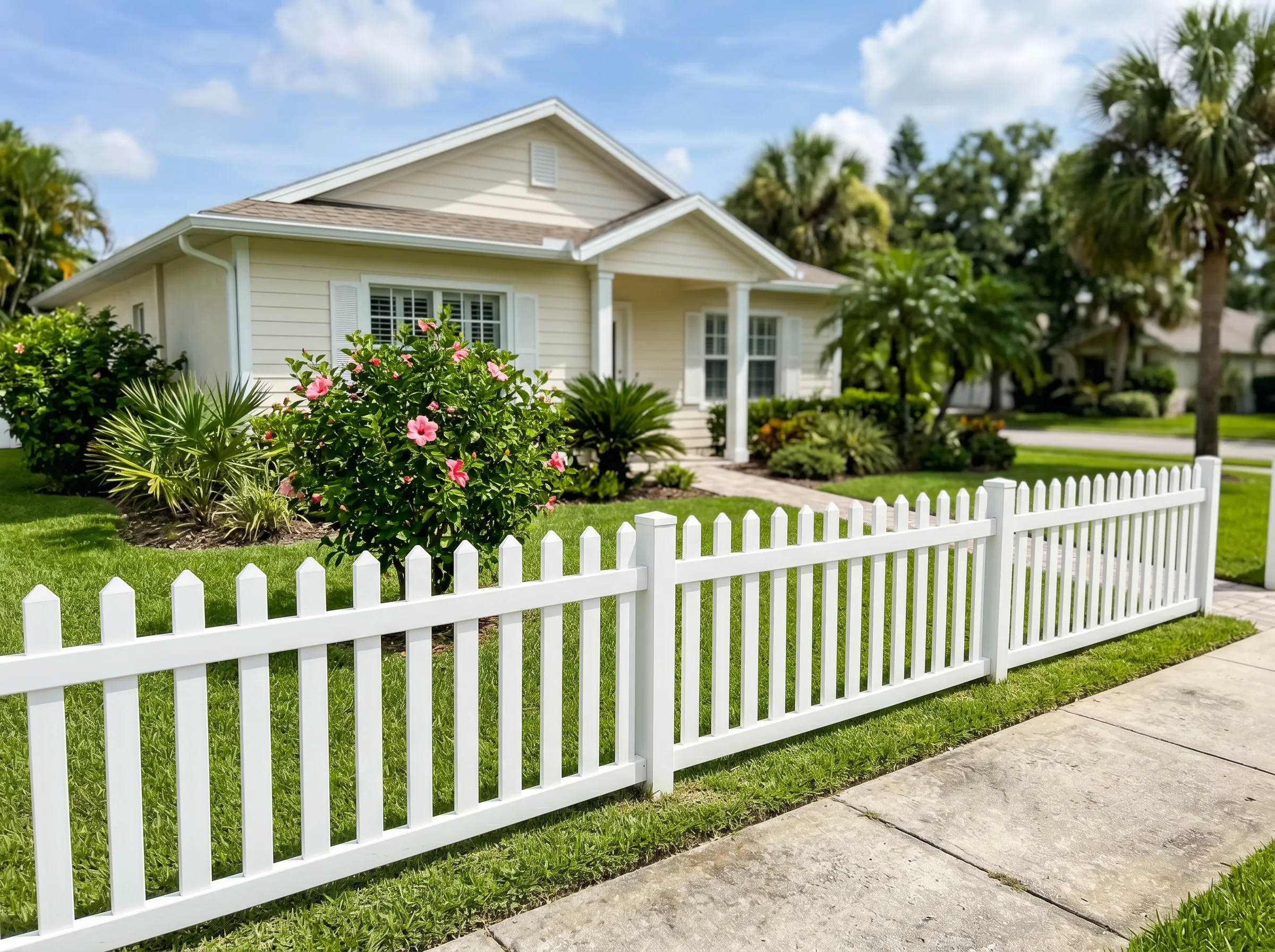
Wood is solid like vinyl, so it catches the same wind. The difference is that wood absorbs water and rots, and it rots first right at the ground line where the post is doing all the work. A wood fence that survived three seasons may not survive the fourth, and nothing about it will look different from the outside.
If you already have wood, that ground line is the first place to check. We compare the two in vinyl vs. wood fence in Florida.
Gates are the weak point of every fence
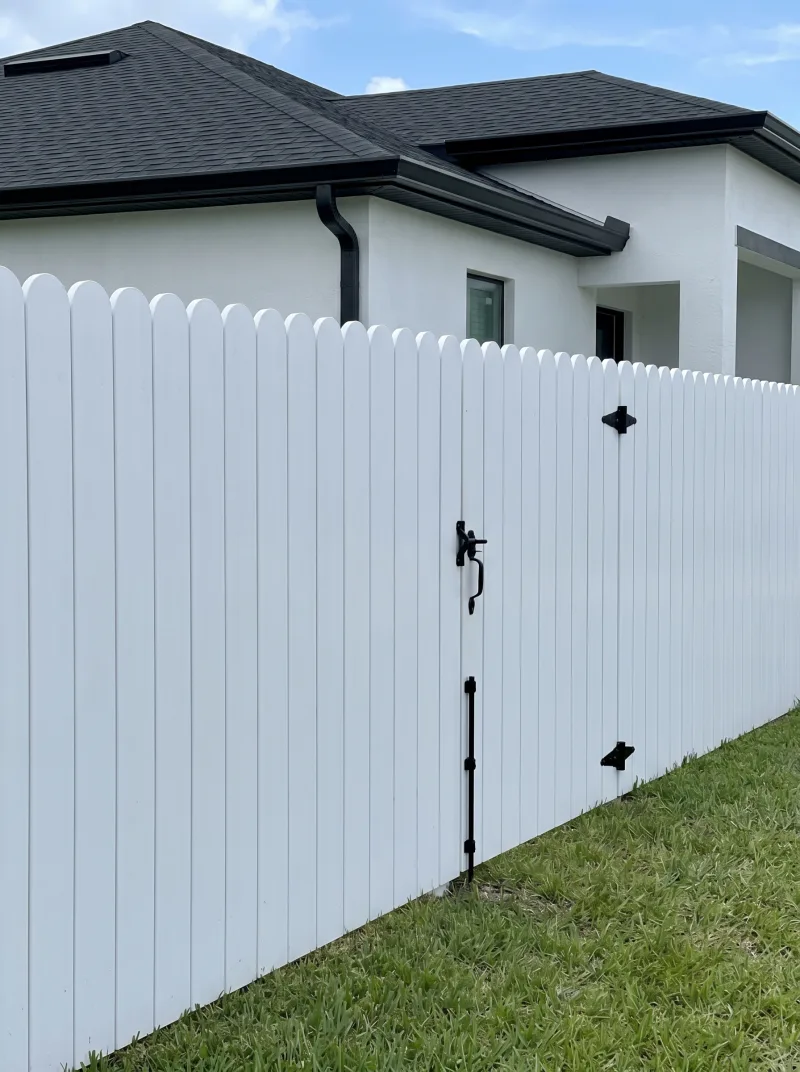
A gate is a hole in your fence with hardware holding it shut. In high wind, gates are the first thing to swing, slam, and tear their hinges out. A wide double gate for a driveway or a trailer is the most exposed piece of the whole run.
Two things help: heavier gate posts set deeper than the line posts, and a drop rod or cane bolt into a ground sleeve so the gate is anchored, not just latched. Before a storm, drop the rod and leave it down.
What to do before the season peaks
- Grab a post and push. Any wobble means the footing is compromised. One loose post takes its neighbors down with it.
- Check the ground line on wood. Push a screwdriver into the post right where it meets the dirt. If it sinks in, the post is done.
- Tighten the hardware. Hinges, latches, and brackets back out over time. Ten minutes with a driver is the cheapest storm prep there is.
- Clear what's leaning on it. Overgrown branches and vines add weight and catch wind. Trim back anything touching the fence.
- Secure the loose stuff in the yard. Most fence damage in a storm comes from something flying into it, not from the wind itself.
After a storm
Walk the whole line before you decide anything. Photograph any damage before you touch it, in case insurance is involved. Then check every post for movement, not just the section that obviously moved — a post can be loosened without looking any different.
Sections that came apart but left their posts solid are usually a quick repair. Posts that shifted are a bigger job, because a leaning post means the concrete moved and it has to be reset.
So what's the best fence for hurricane season?
If storm performance is the only thing you care about, aluminum is the answer, with chain link close behind. Both let wind through instead of fighting it.
But almost nobody buys a fence for storm performance alone. If you want privacy, vinyl is still the right call — just make sure the posts are set for Florida, not for a catalog. Ask any contractor how deep they set posts and how much concrete goes in each hole. A good one will answer without hesitating, and the answer tells you more about the fence than the brochure does.
Worried about the fence you already have? We'll walk the line with you, check the posts and the gates, and tell you straight whether it needs a repair or it's fine. Get your free estimate →

Written by
Andri Ramírez
Founder, Fence Experts of Ocala